
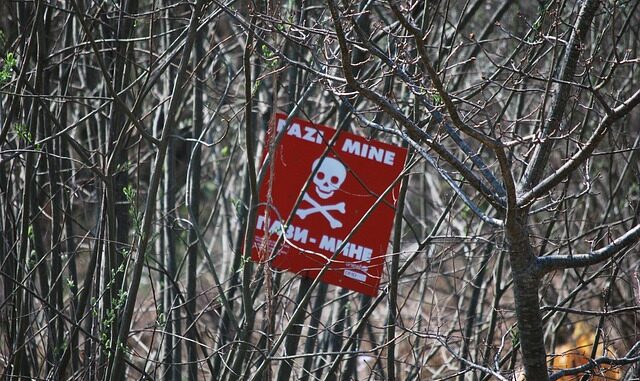

Abstract
In March 2025, a significant shift in international arms control policy was announced by Poland, in concert with the Baltic states of Estonia, Latvia, and Lithuania. These nations declared their collective intention to withdraw from the Ottawa Convention, formally known as the Anti-Personnel Mine Ban Convention, a pivotal treaty prohibiting the development, production, stockpiling, and use of anti-personnel landmines. This momentous decision stems from a deeply perceived and escalating security threat emanating from the Russian Federation, particularly in the aftermath of its full-scale invasion of Ukraine. This comprehensive research report meticulously examines the intricate historical trajectory of landmine warfare, critically evaluates the evolving humanitarian and legal frameworks that govern their deployment, delves into the multifaceted strategic considerations that underpin Poland’s and its Baltic neighbours’ decision, and explores the cutting-edge technological advancements in mine mapping, sophisticated deployment methodologies, and advanced clearance techniques. The report aims to provide a granular analysis of the profound implications this withdrawal carries for regional security dynamics, international humanitarian law, and the future of conventional deterrence in Eastern Europe.
Many thanks to our sponsor Esdebe who helped us prepare this research report.
1. Introduction: A Geopolitical Crossroads for Landmine Policy
The utility and morality of landmine use have long occupied a contentious space within the domains of international security discourse and humanitarian law. The Ottawa Convention, forged in 1997, represented a landmark achievement in global disarmament, seeking the comprehensive elimination of anti-personnel landmines (APM) due to their inherently indiscriminate nature and devastating, long-lasting impact on civilian populations and post-conflict recovery efforts. For nearly three decades, the Convention has served as a cornerstone of humanitarian disarmament, fostering a powerful international norm against APM use.
However, the geopolitical landscape has undergone a dramatic transformation in recent years, profoundly challenging established security paradigms. The protracted conflict in Ukraine, characterized by the extensive and documented use of landmines by Russia, coupled with Moscow’s increasingly assertive and revisionist foreign policy, has compelled front-line NATO nations like Poland, Estonia, Latvia, and Lithuania to critically reassess their defensive postures. Their announced withdrawal from the Ottawa Convention signals a profound recalculation of national security interests, prioritizing perceived military necessity over long-standing humanitarian commitments in an era of heightened existential threat. This report undertakes a comprehensive exploration of this complex issue, dissecting the historical evolution of mine warfare, the moral and legal underpinnings of the Ottawa Convention, the strategic calculus behind the withdrawal, and the technological innovations that may shape future landmine use, offering a detailed analysis of the multifaceted factors at play.
Many thanks to our sponsor Esdebe who helped us prepare this research report.
2. Historical Context and the Evolution of Land Warfare with Mines
2.1 Early Use and Development: From Primitive Traps to Strategic Weapons
The concept of concealed explosive devices designed to impede or injure an enemy is not a modern invention; its roots stretch back centuries. Early forms of landmines can be traced to 13th-century China, where gunpowder-filled ‘ground rats’ were reportedly employed during the Yuan Dynasty, designed to explode upon contact or proximity, disrupting enemy cavalry and infantry formations. In Europe, rudimentary forms appeared in the 16th century, notably the ‘fougasse’, a conical pit filled with gunpowder and covered with rocks or projectiles, detonated either by a fuse or an approaching enemy.
The American Civil War (1861-1865) marked a pivotal moment in the systematic deployment of such devices. Confederate forces, often operating with fewer resources, extensively utilized ‘torpedoes’ – a term then used for both naval and land mines – to protect fortifications, disrupt Union advances, and deny specific areas. These early landmines, though crude, demonstrated their effectiveness in shaping battlefields and instilling psychological terror, compelling opposing forces to adopt cautious, slower advances.
World War I witnessed the widespread adoption and industrialization of landmine production. In the static trench warfare of the Western Front, both anti-personnel and anti-vehicle mines became integral to defensive lines, designed to protect trenches, barbed wire entanglements, and fortifications, or to deny access to key communication routes. They were often combined with other obstacles to create formidable defensive barriers.
World War II saw an unprecedented scale of mine warfare, transforming mines into critical strategic weapons. German forces, in particular, employed vast minefields to channel Allied advances, protect vital areas, and inflict heavy casualties. The Wehrmacht’s ‘Schu-mine 42’, a low-cost, minimal-metal anti-personnel mine, became infamous for its insidious nature, making detection difficult. The Allies, in turn, developed sophisticated anti-tank mines like the British ‘Hawkins mine’ and specialized mine-clearing vehicles. The conflict underscored that mines, when integrated into a comprehensive defensive strategy, could be a highly effective, force-multiplying tool.
The Cold War era saw further proliferation and technological advancement. The Soviet Union developed a vast array of standardized mine designs, such as the PMN series of blast anti-personnel mines and the TM-46 anti-tank mine, which were widely exported and deployed in proxy conflicts globally. The United States developed its own arsenal, including the iconic M18 Claymore, a directional fragmentation mine, which offered a degree of discriminative capability not found in traditional blast mines. The post-Cold War period, while seeing a push for disarmament, also witnessed the emergence of improvised explosive devices (IEDs) in asymmetric conflicts, blurring the lines between traditional military mines and non-state actor ordnance.
2.2 Classification and Characteristics of Landmines
Landmines are broadly categorized by their intended target and activation mechanism. A more nuanced classification reveals significant differences in design, lethality, and humanitarian impact:
-
Anti-Personnel Mines (APM): Designed primarily to injure or kill individuals, these mines are typically smaller and contain a relatively small explosive charge. Their primary function is often to disable rather than instantly kill, thereby burdening the enemy’s logistical and medical systems. APM can be further sub-classified:
- Blast Mines: These mines (e.g., Soviet PMN-2) are typically activated by direct pressure, causing traumatic injuries, often involving limb loss, severe soft tissue damage, and secondary infections. They are inherently indiscriminate, as they cannot distinguish between a soldier and a civilian.
- Fragmentation Mines: These mines project metal fragments over a wide area, causing multiple injuries or fatalities. Examples include ‘bounding mines’ (like the German S-mine or US M16), which are ejected several feet into the air before detonating, and tripwire-activated mines, which release shrapnel horizontally. Their casualty radius is significantly larger than blast mines.
- Directional Fragmentation Mines: Exemplified by the US M18 Claymore, these are user-controlled mines designed to project a fan-shaped pattern of steel ball bearings in a specific direction. While still capable of causing widespread casualties, their command-detonation feature offers a degree of control over when and where they are activated, theoretically allowing for some distinction between combatants and non-combatants.
-
Anti-Vehicle Mines (AVM) / Anti-Tank Mines (ATM): These are larger devices, containing substantial explosive charges, designed to disable or destroy vehicles (tanks, armoured personnel carriers, trucks). They are typically activated by direct pressure from a vehicle, magnetic influence, or tilt rods. Key types include:
- Blast Mines: (e.g., Russian TM-46, Italian TC/6) Rely on a large explosive charge to rupture a vehicle’s undercarriage or tracks.
- Shaped Charge/Full-Width Attack Mines: (e.g., French HPD-2A) Employ a shaped charge to penetrate thicker armour, or use multiple sensors to detect and attack the full width of a vehicle, increasing the probability of a hit.
- Magnetic Influence Mines: Detect the magnetic signature of a vehicle, detonating without direct contact.
- Off-Route Mines: These mines are placed off the direct path of a road and use sensors (acoustic, seismic, infrared, magnetic) to detect an approaching vehicle, then launch an explosive charge or projectile (often a shaped charge) at its side, which is typically less armoured.
Crucially, a distinction has emerged between ‘dumb mines’ – older, persistent mines that remain active indefinitely until disturbed or cleared – and ‘smart mines’. Smart mines are designed with self-destruct or self-deactivate mechanisms, theoretically ensuring they become inert after a specified period, thereby reducing the long-term humanitarian hazard. This technological evolution is central to the ongoing debate about the future of mine warfare.
2.3 Global Stockpiles, Usage, and Contamination
Despite the robust international efforts spearheaded by the Ottawa Convention, landmines, both conventional and improvised, remain a grim reality in numerous conflict zones worldwide. The Landmine Monitor, an initiative of the International Campaign to Ban Landmines (ICBL), consistently tracks the use, production, stockpiling, and transfer of landmines. Their annual reports (e.g., 2023 and 2024 editions) highlight that states not party to the Ottawa Convention, as well as non-state armed groups, continue to utilize landmines extensively.
Russia’s extensive deployment of various types of landmines, including anti-personnel and anti-vehicle mines, as well as remotely delivered scatterable munitions, in Ukraine since 2022 represents a significant and tragic re-escalation of mine warfare. These operations have created vast contaminated areas, posing immense long-term threats to civilians and impeding reconstruction efforts. Beyond Ukraine, countries like Myanmar, Syria, Yemen, and Afghanistan have also reported active landmine use by state or non-state actors in recent years.
Major military powers, including China, India, Israel, North Korea, Pakistan, Russia, and the United States, remain outside the Ottawa Convention. While some, like the United States, have adopted policies that largely align with the Convention’s prohibitions (e.g., no production or acquisition of APM, restrictions on use to the Korean Peninsula, a commitment to destroy non-Korean stockpiles), they retain the legal right to use APM and maintain significant stockpiles. This divergence underscores the enduring tension between military utility and humanitarian concerns. The estimated global contaminated area by landmines and explosive remnants of war (ERW) still spans hundreds of square kilometres across dozens of countries, perpetually hindering economic development and posing daily threats to millions.
Many thanks to our sponsor Esdebe who helped us prepare this research report.
3. Humanitarian Imperatives and International Legal Architecture
3.1 The Profound Humanitarian Impact: Beyond Immediate Casualties
The humanitarian impact of landmines extends far beyond the immediate fatalities and grievous injuries they inflict. Their insidious nature means they remain active long after conflicts have concluded, becoming silent killers that terrorize communities for decades. The consequences are multi-layered and devastating:
- Physical and Psychological Trauma: Survivors often face lifelong disabilities, requiring extensive and costly medical care, rehabilitation, and prosthetic limbs. The psychological scars of landmine incidents – fear, anxiety, depression, and post-traumatic stress disorder – affect not only victims but entire communities living in contaminated areas.
- Socio-economic Disruption: Landmines render vast tracts of arable land unusable, directly impacting agricultural productivity and food security. They block access to essential resources like water points, schools, and markets, hindering economic recovery and exacerbating poverty. The presence of mines can lead to mass displacement, as communities abandon their homes in search of safer areas, putting further strain on resources and infrastructure.
- Infrastructure and Development Impairment: Reconstruction efforts in post-conflict zones are severely hampered by mine contamination. Roads, bridges, and utility lines cannot be safely repaired or rebuilt, delaying the return to normalcy and obstructing humanitarian aid delivery.
- Exacerbation of Vulnerabilities: Children, being naturally inquisitive, are particularly susceptible to landmine accidents. Farmers, herders, and refugees returning to their homes are also at high risk. The indiscriminate nature of APM means they cannot differentiate between a combatant and a child playing in a field, making them a weapon of egregious moral concern.
Case studies from heavily mined nations like Afghanistan, Cambodia, Angola, and Mozambique vividly illustrate these long-term consequences. These countries have invested enormous resources and decades into demining efforts, often with international assistance, yet the legacy of mines persists, continuing to claim lives and stifle development.
3.2 The Ottawa Convention: A Landmark in Humanitarian Disarmament
The Ottawa Convention, formally the Convention on the Prohibition of the Use, Stockpiling, Production and Transfer of Anti-Personnel Mines and on Their Destruction, adopted in 1997, represents one of the most successful disarmament treaties in history. Its genesis lay in the tireless advocacy of the International Campaign to Ban Landmines (ICBL) and its co-founder Jody Williams, who, alongside the campaign, received the Nobel Peace Prize in 1997 for their efforts.
The Convention’s core provisions are:
* Prohibition: A complete ban on the use, development, production, acquisition, stockpiling, retention, and transfer of anti-personnel mines.
* Stockpile Destruction: State parties must destroy all stockpiled APM within four years of becoming party to the Convention.
* Mined Area Clearance: State parties must clear all mined areas under their jurisdiction or control within ten years.
* Victim Assistance: State parties are obligated to provide assistance for the care, rehabilitation, and social and economic reintegration of mine victims.
* Cooperation and Assistance: Encouraging international cooperation and assistance for implementing the Convention’s provisions.
As of August 2025, 163 states had ratified or acceded to the treaty, demonstrating widespread global commitment. The Convention has been remarkably successful in reducing the global production, trade, and use of APM. Millions of stockpiled mines have been destroyed, and vast tracts of land have been cleared, leading to a significant decrease in new mine casualties in many formerly contaminated areas. However, its universality remains incomplete, with major military powers like Russia, China, the United States, India, Pakistan, and Israel remaining outside the framework, citing military necessity and the right to self-defense as their primary reasons.
3.3 Poland and Baltic States’ Withdrawal: A Strategic Reassessment
In a coordinated announcement in March 2025, Poland, along with its strategic partners Estonia, Latvia, and Lithuania, formally declared their intention to withdraw from the Ottawa Convention. This decision, conveyed through joint statements from their respective defense ministers, was explicitly linked to the dramatically altered security environment in Eastern Europe, primarily the ‘increased military threats from Russia and Belarus’.
The ministers articulated a clear rationale: the Convention, while laudable in its humanitarian aims, had placed these front-line states at a ‘grave disadvantage’ vis-à-vis potential adversaries who are not bound by its prohibitions. The official statement from the Polish Ministry of National Defence underscored the need for ‘flexibility in defense strategies to bolster NATO’s eastern flank’, emphasizing that their withdrawal was a necessary measure to enable them to employ ‘all necessary measures to defend their territory and freedom’ in the face of what they perceive as an existential threat. The extensive and indiscriminate use of landmines by Russia in Ukraine served as a stark, recent precedent illustrating the military utility of such weapons in large-scale conventional warfare.
Under Article 20 of the Ottawa Convention, a state party may withdraw from the treaty by providing a six-month written notification to the depositary (the United Nations Secretary-General). The withdrawal becomes effective six months after the notification is received. While this does not immediately translate into a deployment of landmines, it removes the legal impediment, allowing these nations to integrate mine warfare into their future defense planning and doctrine. This decision represents a profound shift from a humanitarian-driven disarmament stance to a security-first posture, highlighting the acute pressures felt by nations directly confronting an aggressive military power.
Many thanks to our sponsor Esdebe who helped us prepare this research report.
4. Strategic Rationale for Landmine Deployment: Rebalancing Deterrence
4.1 Deterrence, Defense, and the Concept of a Layered Barrier
The decision by Poland and the Baltic states to reconsider landmine use is rooted in a re-evaluation of fundamental principles of deterrence and defense, particularly in the context of asymmetric military capabilities. Landmines, when strategically deployed, can serve as a potent force multiplier, offering several key advantages:
- Area Denial and Channeling: Landmines can effectively deny an adversary access to critical terrain, channelling their forces into pre-determined killing zones or through choke points where they can be engaged by other weapon systems. This significantly complicates enemy movement, logistics, and operational planning.
- Delay and Disruption: Minefields can slow down an advancing enemy, buying crucial time for defenders to mobilize reserves, redeploy forces, establish stronger defensive positions, or launch counter-offensives. This delay can be particularly vital for smaller nations facing a numerically superior adversary, allowing them to gain a temporal advantage.
- Force Protection: Mines can protect flanks, cover retreats, or secure static positions, freeing up combat troops for other missions. They can also deter probing attacks and special forces incursions.
- Cost-Effectiveness: Compared to sophisticated air defense systems, advanced fighter jets, or high-precision long-range artillery, landmines are relatively inexpensive to acquire and deploy, offering a significant deterrent capability for nations with more constrained defense budgets. This cost-effectiveness is particularly attractive when facing an adversary with vastly superior military spending.
- Psychological Deterrence: The mere threat of encountering minefields can have a significant psychological impact on enemy morale, increasing caution, slowing advances, and fostering a sense of vulnerability.
In the context of NATO’s eastern flank, the deployment of landmines is envisioned as a critical component of a ‘layered defense’ strategy. This involves creating integrated defensive barriers using a combination of natural obstacles, anti-tank ditches, ‘dragon’s teeth’ (concrete anti-vehicle obstacles), and intelligently placed minefields. Such a comprehensive barrier aims to disrupt an attacker’s momentum, inflict casualties, degrade their combat power, and provide opportunities for defensive forces to engage effectively. This approach reflects a shift towards a more robust, forward defense posture, moving beyond the concept of purely humanitarian adherence when faced with an immediate and tangible military threat.
4.2 Addressing Asymmetry and Asserting Sovereign Defense
The core of the strategic rationale articulated by Poland and the Baltic states revolves around addressing the ‘military asymmetry’ created by their adherence to the Ottawa Convention while potential adversaries, notably Russia, operate unfettered by such constraints. As the Polish statement succinctly put it, their adherence placed them at a ‘grave disadvantage’.
Russia has demonstrated a willingness to disregard international humanitarian law, as evidenced by its extensive use of mines and cluster munitions in Ukraine, often without proper marking or concern for civilian populations. This creates an uneven playing field, where one side voluntarily disarms itself of a potentially effective defensive tool, while the other retains and actively employs it. The withdrawal allows these nations to restore what they perceive as a fundamental aspect of their sovereign right to self-defense, as enshrined in Article 51 of the United Nations Charter.
This decision also reflects a broader reassessment within NATO. While NATO as an alliance does not possess or use anti-personnel mines, and most of its members are signatories to the Ottawa Convention, the individual member states have the sovereign right to make their own decisions on such treaties. The unique geographic vulnerabilities of the Baltic states – with long, flat borders directly adjacent to Russia and Belarus, and limited strategic depth – make defensive measures that can delay and disrupt an invading force particularly attractive. For these nations, landmines are not merely a weapon but a critical component of a credible conventional deterrence posture, signaling to a potential aggressor that any incursion would come at an unacceptably high cost in terms of time, resources, and casualties. The aspiration is to integrate modern ‘smart mine’ technologies into their doctrine, balancing military utility with a commitment to minimizing long-term humanitarian consequences, thereby creating a more ethically defensible framework for use.
Many thanks to our sponsor Esdebe who helped us prepare this research report.
5. Technological Advances in Mine Mapping, Deployment, and Clearance
The discourse around landmines has been profoundly shaped by continuous technological innovation. Modern mine warfare contrasts sharply with the practices of previous centuries, offering capabilities that aim to mitigate some of the traditional humanitarian concerns while enhancing military effectiveness.
5.1 Advanced Mapping, Detection, and Remote Sensing Technologies
The accurate identification and mapping of minefields are crucial for both military operations and post-conflict humanitarian clearance. Significant advancements have revolutionized these processes:
- Geospatial Information Systems (GIS): Modern military forces and humanitarian demining organizations heavily rely on GIS for precise recording and management of minefield data. High-resolution satellite imagery, combined with digital terrain models (DTM) and detailed ground-survey data, allows for the creation of incredibly accurate digital maps. These systems can track individual mine placement, terrain features, and clearance progress, making minefield management more efficient and safer.
- Unmanned Aerial Vehicles (UAVs)/Drones: UAVs equipped with various sensors – including high-resolution cameras, multispectral and hyperspectral imagers, thermal cameras, and even ground-penetrating radar (GPR) – can rapidly survey large areas, detect disturbed ground, vegetation anomalies, or heat signatures that might indicate mine presence. This provides a non-intrusive, risk-averse method for initial assessment and monitoring.
- Multi-Sensor Detection Systems: Traditional metal detectors have evolved into sophisticated multi-sensor platforms that combine electromagnetic induction (EMI) for metal detection with GPR for detecting non-metallic mines or plastic-cased mines. Other experimental technologies include acoustic sensors, infrared detectors for heat signatures, and even chemical sniffers designed to detect explosive vapours.
- Robotic and Autonomous Systems: Ground-based robots, equipped with the aforementioned sensor arrays, can systematically sweep dangerous areas, reducing the direct risk to human deminers. These robots can navigate complex terrain, autonomously map findings, and even neutralize mines in place.
- Biometric Detection: Research continues into using animals with a keen sense of smell, such as mine detection rats (MDRs) and specially trained dogs, to sniff out explosive traces. While not a primary mapping tool, they provide an invaluable, efficient, and cost-effective method for confirming suspected mine contamination.
5.2 Modern Deployment Techniques and ‘Smart’ Mines
Modern mine deployment prioritizes precision, speed, and, increasingly, retrievability or self-neutralization, moving away from the indiscriminate ‘legacy’ minefields of the past:
- Remote Delivery Systems: These systems allow for the rapid deployment of large numbers of mines without exposing personnel to direct danger. Artillery, rocket launchers, and aircraft can scatter mines over wide areas. Examples include the US M70 Scatterable Mine System (containing both anti-personnel and anti-vehicle mines) or various sub-munitions containing APM like the controversial PFM-1 ‘Butterfly’ mine (primarily a Soviet/Russian design). Crucially, modern doctrine emphasizes that such mines should incorporate self-destruct or self-deactivate mechanisms.
- Mechanized Mine-Laying Vehicles: Specialized vehicles (e.g., the German Minenwurfsystem 85) can rapidly lay anti-tank and sometimes anti-personnel mines along a designated route, creating dense minefields in a short timeframe. These systems often integrate with GIS for precise recording of mine locations.
- Robotic and Drone-based Deployment: The advent of sophisticated robotics and drones offers the potential for highly precise, selective, and potentially retrievable mine placement. Small drones could deploy individual ‘smart mines’ in specific locations, guided by GPS coordinates, allowing for dynamic minefield creation and reduction.
- Self-Destruct/Self-Deactivate (SD/DA) Mines: This is arguably the most significant technological advancement in mitigating the humanitarian risks of landmines. SD/DA mines are designed to become inert after a predetermined period (e.g., hours, days, weeks) through an internal timer that triggers a self-destruction charge or renders the firing mechanism inoperable. While these technologies are not infallible, they represent a conscious effort to prevent mines from becoming long-term threats to civilians after the cessation of hostilities. Their inclusion is central to any ‘responsible use’ doctrine.
- Targeted and Networked Mines: Future mine systems could be integrated into broader sensor networks. These ‘smart’ mines might possess advanced sensors (acoustic, seismic, magnetic, infrared) to differentiate between vehicle types, or even between military and civilian vehicles, thereby enhancing their discriminative capability. Command-detonated systems allow human operators to decide when and where a mine explodes, offering ultimate control.
5.3 Advanced Clearance, Neutralization, and Remediation Strategies
Equally vital are innovations in mine clearance, which aim to make the process safer, faster, and more efficient:
- Robotic Demining Systems: Large, armoured remote-controlled vehicles equipped with flails, tillers, or rollers are highly effective in clearing anti-vehicle mines and reducing the density of anti-personnel mines over large areas. Smaller robots can be used for precise detection and neutralization of individual mines, reducing direct human exposure to danger.
- Advanced Personal Protective Equipment (PPE): Modern PPE for deminers is lighter, more flexible, and offers improved protection against blast and fragmentation effects, enhancing the safety of manual demining teams.
- Manual Demining Best Practices: While technology aids, manual demining remains crucial for complex terrain and precise clearance. Enhanced training, rigorous safety protocols, and systematic area reduction techniques are continuously refined.
- Information Management Systems for Mine Action (IMSMA): Databases like IMSMA are critical tools for humanitarian demining. They collect, store, and disseminate information on mine contamination, clearance progress, and victim data, enabling coordinated and targeted demining efforts globally.
- Explosive Ordinance Disposal (EOD) Techniques: Advancements in EOD include remote neutralization techniques, specialized tools for rendering mines safe in situ, and even experimental chemical or biological agents for degrading explosives.
- Humanitarian Demining vs. Military Breaching: It is important to distinguish between humanitarian demining (meticulous, area-by-area clearance to ensure land is safe for civilian use) and military breaching (rapid, often incomplete clearance of a path through a minefield for tactical purposes). Both benefit from technological advancements but have different objectives and methodologies.
These technological advancements offer a potential pathway for nations to re-evaluate landmine use by integrating ‘responsible’ practices that prioritize civilian safety, while still leveraging their military utility in a defensive context. However, the reliability of such systems, particularly self-destruct mechanisms, and the adherence to strict protocols remain critical considerations.
Many thanks to our sponsor Esdebe who helped us prepare this research report.
6. Broader Implications of Poland’s Decision: A Shifting Landscape
6.1 Regional Security Dynamics and a Potential ‘Domino Effect’
Poland’s decision, mirrored by the Baltic states, carries significant weight for regional security dynamics and could potentially initiate a cascading effect among other frontline NATO members. The explicit linkage of the withdrawal to the perceived Russian threat may prompt other nations sharing borders with Russia or Belarus, such as Finland (though already a signatory with a unique derogation on stockpiles) or Romania, to reassess their own adherence to the Ottawa Convention. This could lead to a fragmentation of arms control norms within the region, potentially resulting in a more heavily militarized and barrier-laden landscape across Eastern Europe.
From Russia’s perspective, this move will likely be framed as an aggressive act by NATO, reinforcing its narrative of encirclement and justification for its own conventional deterrence policies. It could lead to a reciprocal increase in Russian border fortifications and troop deployments, further escalating tensions. The reintroduction of landmines as a conventional defensive tool along the NATO-Russia border risks cementing a new ‘iron curtain’ in Europe, characterized by physical barriers and heightened military readiness. It also challenges the collective security principle of NATO, where individual members’ actions, while sovereign, can have alliance-wide implications for doctrine and interoperability regarding arms control.
6.2 International Reactions and Erosion of Humanitarian Norms
The decision has elicited a spectrum of reactions, with significant concern expressed by international bodies and humanitarian organizations.
- United Nations Condemnation: UN Secretary-General António Guterres and other UN officials have expressed deep regret and concern, warning that any weakening of the Ottawa Convention could ‘spark a dangerous race to the bottom’, undermining decades of progress in humanitarian disarmament. They underscore that even ‘smart mines’ carry inherent risks of malfunction or improper deployment, still posing a long-term threat.
- Humanitarian Organizations’ Outcry: Groups like Humanity & Inclusion (HI) and the International Campaign to Ban Landmines (ICBL) have vehemently condemned the withdrawal. They argue that the decision undermines the global norm against APM use and sets a dangerous precedent, potentially emboldening other non-signatory states or even encouraging re-entry into the mine warfare arena. They reiterate the fundamental principle that APM are inherently indiscriminate, regardless of technological advancements.
- Mixed Reactions from Allies: While some NATO allies, particularly those with similar frontline vulnerabilities, might privately understand the strategic rationale, publicly, the decision creates diplomatic challenges. Nations that have been strong proponents of the Ottawa Convention, like Canada (which played a leading role in its inception) and Norway, may express disappointment and concern over the erosion of international humanitarian law. This could lead to internal debates within NATO regarding the balance between national defense autonomy and shared arms control commitments.
- Legal and Moral Dilemmas: The withdrawal forces a stark confrontation between the military imperative of self-defense against a conventional aggressor and the ethical and legal obligations of international humanitarian law. It prompts a debate about whether certain weapons, due to their potential for indiscriminate harm, should be universally banned, irrespective of a state’s security calculus.
6.3 Future Prospects and the Path Forward
The long-term impact of Poland’s and the Baltic states’ decision will be contingent on several critical factors:
- Responsible Use Doctrine: A key element will be whether these nations develop and adhere to a doctrine of ‘responsible’ or ‘humanitarian’ mine use. This would involve explicit commitments to using only self-destructing/self-deactivating mines, meticulous mapping of minefields, clear marking of mined areas, and swift clearance post-conflict. Such a doctrine, while not satisfying full Ottawa Convention compliance, could aim to mitigate humanitarian concerns as much as possible.
- NATO’s Stance: While NATO itself does not endorse APM use, how the alliance collectively manages this divergence in policy among its members will be crucial. It could lead to discussions about adapting NATO’s collective defense strategies to accommodate members’ varied approaches to certain weapon systems.
- Diplomatic Engagement: Continued dialogue with non-signatories and proponents of the Ottawa Convention will be essential. This could explore avenues for shared protocols around ‘smart mine’ technologies or even future conditional re-accession to the Convention if the security environment permits or if the Convention’s framework evolves.
- Investment in Clearance and Victim Assistance: Despite withdrawing from the Convention, these nations could demonstrate their commitment to humanitarian principles by significantly increasing their contributions to international mine clearance efforts and victim assistance programs, both within their own territories (should mines be deployed and need clearance) and globally.
- Reliability of ‘Smart’ Mines: The efficacy and reliability of self-destruct and self-deactivate mechanisms will be under intense scrutiny. Any failures could undermine the ‘responsible use’ argument and reignite humanitarian concerns.
The decision by Poland and the Baltic states is not merely a technical withdrawal from a treaty; it represents a profound reflection of the current geopolitical anxieties and a rebalancing of national security against universal humanitarian norms. Its implications will reverberate for years to come, shaping defense policies, international law, and the lives of those caught in future conflicts.
Many thanks to our sponsor Esdebe who helped us prepare this research report.
7. Conclusion
The collective decision by Poland, Estonia, Latvia, and Lithuania to withdraw from the Ottawa Convention marks a seminal moment in international arms control and security policy. This move, driven by a heightened perception of an existential threat from Russia in the wake of its aggression in Ukraine, fundamentally underscores the complex interplay between national security imperatives and established international humanitarian obligations. While the Convention has undeniably achieved significant success in reducing the global scourge of anti-personnel landmines and fostering a powerful humanitarian norm, the geopolitical realities of 2025 have compelled these front-line states to prioritize what they view as essential defensive capabilities.
The historical trajectory of landmine warfare reveals their enduring utility as a force multiplier, a tool for deterrence, and a means of shaping battlefields, particularly for nations confronting numerically superior adversaries. Modern technological advancements in ‘smart mines’ – featuring self-destruct and self-deactivate mechanisms, precise deployment, and advanced mapping – offer a potential pathway for their use with theoretically mitigated long-term humanitarian impact. However, the reliability of such technologies and adherence to stringent operational protocols will be critical to any responsible application.
This withdrawal carries profound implications: it risks undermining a crucial international norm against indiscriminate weapons, eliciting strong condemnation from humanitarian organizations and some international partners, and potentially leading to a regional arms race in conventional barriers. Yet, for Poland and the Baltic states, it represents a strategic calculus aimed at rebalancing military asymmetry and fortifying their defense postures along NATO’s eastern flank.
Ultimately, the long-term ramifications of this decision will hinge on the development and rigorous implementation of a comprehensive and ethically defensible mine warfare doctrine by these nations. Continued international cooperation, transparent adherence to the principles of distinction and proportionality in future deployments, and unwavering commitment to victim assistance and eventual clearance remain paramount. In an increasingly volatile global environment, this development highlights the enduring tension between the aspiration for a humane world free of indiscriminate weapons and the stark realities of national defense in the face of perceived aggression. Navigating this intricate balance will require sustained dialogue, diplomatic ingenuity, and a renewed commitment to both security and humanitarian principles on the global stage.
Many thanks to our sponsor Esdebe who helped us prepare this research report.
References
- Al Jazeera. (2025). Poland and Baltic states to dump landmine treaty citing Russian threat. Retrieved from https://www.aljazeera.com/news/2025/3/18/poland-and-baltic-states-to-dump-landmine-treaty-citing-russian-threat
- United Nations Office for Disarmament Affairs. (n.d.). Anti-Personnel Landmines Convention. Retrieved from https://disarmament.unoda.org/en/our-work/conventional-arms/legal-instruments/anti-personnel-landmines-convention
- Government of Poland, Ministry of National Defence. (2025). Statement by the Estonian, Latvian, Lithuanian, and Polish Ministers of Defence on Withdrawal from the Ottawa Convention. Retrieved from https://www.gov.pl/web/national-defence/statement-by-the-estonian-latvian-lithuanian-and-polish-ministers-of-defence-on-withdrawal-from-the-ottawa-convention
- United Nations Digital Library. (2025). Poland at a grave disadvantage, as possible hostile actors may exploit the military asymmetry created by our legal and moral restraint. Retrieved from https://digitallibrary.un.org/record/4087219/files/S_2025_523-EN.pdf
- Humanity & Inclusion US. (2025). HI Condemns Proposal to Withdraw from the Ottawa Convention by Poland, Lithuania, Latvia, and Estonia. Retrieved from https://www.hi-us.org/en/hi-condemns-proposal-to-withdraw-from-the-ottawa-convention-by-poland–lithuania–latvia–and-estonia
- Wikipedia. (n.d.). Ottawa Treaty. Retrieved from https://en.wikipedia.org/wiki/Ottawa_Treaty
- Wikipedia. (n.d.). International Campaign to Ban Landmines. Retrieved from https://en.wikipedia.org/wiki/International_Campaign_to_Ban_Landmines
- United Nations. (2025). Any weakening of the Ottawa Convention to ban landmines could spark a dangerous race to the bottom, warns UN Chief. Retrieved from https://www.un.org/en/peace-and-security/page/any-weakening-of-the-ottawa-convention-to-ban-landmines-could-spark-a-dangerous-race-to-the-bottom-warns-un-chief
- Landmine Monitor. (Annual Reports, various years, e.g., 2023, 2024). This is an assumed reference for detailed mine usage data.
- International Committee of the Red Cross (ICRC). (Various publications). This is an assumed reference for detailed humanitarian law and landmine impact.
- Human Rights Watch (HRW). (Various reports on landmine use in conflicts). This is an assumed reference for reports on landmine usage in specific conflicts.